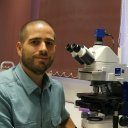
Prof Cobus Meyer Visagie is a new generation Mycologist specialized in Aspergillus, Penicillium, Talaromyces and other molds from the natural and built environment. His Research focus includes their biodiversity, ecology, phylogenetics, nomenclature and identification with a particular interest in taxonomically robust ecological and biodiversity studies.
Prof Visagie's work has a strong fieldwork component and he does a lot of fungal isolations from various habitats, including extreme fungi. He has Experience working in multidisciplinary collaborations with genomics, metagenomics, analytical biochemistry, mycotoxicology, ecology, plant pathology and biotechnology. His skills include, but are not limited to, the isolation, culturing and preservation of fungal cultures, identification and describing of new species using morphological, physiological, chemical and phylogenetic data, and extensive knowledge on the taxonomy and nomenclature of mentioned genera. In addition to research, he has a strong desire to train new mycologists and generate public awareness on the importance of fungi.
His research focus includes their biodiversity, ecology, phylogenetics, nomenclature and identification with a particular interest in taxonomically robust ecological and biodiversity studies. His major Contribution to the international mycological community has been the accepted species lists for Aspergillus, Penicillium and Talaromyces that he Prepared and Published in Samson et al (2014), Visagie et al (2014) and Yilmaz et al (2014). Before these papers, describing new species in these genera was very complicated because reference data was unavailable. Since Publishing these accepted species lists and associated DNA sequence reference data, Aspergillus grew from 339 to 450 species, Penicillium from 354 to 483 species, and Talaromyces from 88 to 171 species. Lists are updated by himself and uploaded onto the website of the International Commission of Penicillium and Aspergillus. These papers thus had a big international impact and have been cited a combined 1 230 times (on 2020/07/03).
From his own perspective, the accepted species lists allowed him to easily describe the new species he came across. By the end of 2019, Prof Visagie had introduced 46 Aspergillus, 72 Penicillium & 20 Talaromyces species. Considering that Penicillium currently has 439 accepted species, a large proportion was thus described by him. Many of these were originally isolated from South Africa and there are many more local species waiting to be discovered, making local knowledge and diversity, internationally relevant and important.