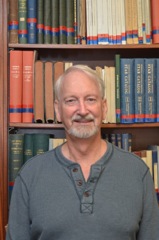
Professor Russ Taylor received a BSc in Astronomy, from the University of Western Ontario in 1976, and a PhD in Physics (Radio Astronomy) from the University of British Columbia in 1982. He is currently the Director of the South African Inter-University Institute for Data Intensive Astronomy and a South African Joint Research Chair in Radio Astronomy at the University of Cape Town and University of the Western Cape. Before coming to South Africa in 2014, Prof Taylor was Professor of Astrophysics at the University of Calgary and Director of the three-university Institute for Space Imaging Science. Past positions include: Head of the Department of Physics and Astronomy University of Calgary, Visiting Scientist, United States National Radio Astronomy Observatory; Distinguished Visiting Scientist, Australian Commonwealth Industrial Research Organization; Research Associate, University of Manchester, Jodrell Bank Observatory; Research Associate, University of Groningen, Kapteyn Astronomical Laboratory; Natural Sciences and Engineering Research Council of Canada (NSERC) Postdoctoral Fellow, University of Toronto.
He has served on numerous national and international committees and boards. Among these are several that impact planning and development of astronomy world-wide, including President of the Radio Astronomy Division of the International Astronomical Union. He has played a leading role on Square Kilometre Array (SKA) Project since its inception, serving as founding Executive Secretary of the International Square Kilometre, Array Steering Committee, founding chair of the International Square Kilometre Array (SKA) Science Advisory Committee, vice-chair of the International Square Kilometre Array (SKA) Science and Engineering Committee, and as a member of the International Board of the Preparatory Phase Program for the Square Kilometre Array (SKA) and of the International Board of the Square Kilometre Array (SKA) Organisation. As the founding Square Kilometre Array (SKA) International Project Scientist in 1998 he co-authored the first science case for theSquare Kilometre Array (SKA) project.