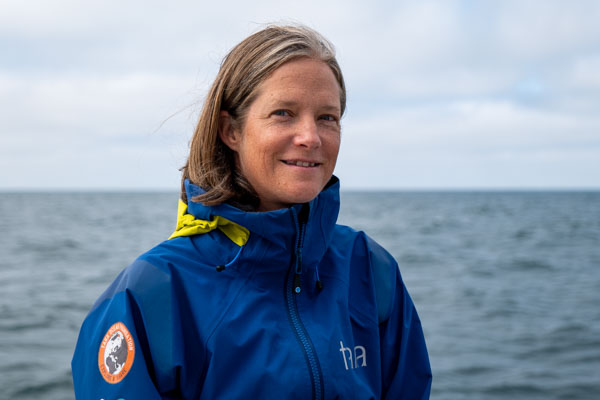
Dr Emma Rocke is a marine microbiologist at the University of Cape Town, with ten years of experience in applying cutting edge molecular tools to answer ecological questions from a marine microbiome perspective. She strive for a holistic approach to answer scientific questions through collaborations with ecologists, engineers, and physical oceanographers. Her PhD, thesis focussed on marine molecular ecology of protist diversity in coastal hypoxic environments. She adapted existing methods to study ecologically relevant microbes in oxygen starved environments. During her tenure as a scientist, she has collaborated with colleagues and supervised students in the United States of America, Canada, Hong Kong and Europe.
Dr Rocke started my postdoctoral research here at University of Cape Town in a field that had been barely researched at the time. During her 10 years at University of Cape Town and Nelson Mandela University, she has built expertise and technology capacity in the marine microbial field through post graduate student supervision and teaching specialised modules at the Honours and MSc level. They now have a working knowledge of the Southern Benguela microbiome, working in close collaboration with oceanographers and biogeochemists. They are all trained to sequence their own samples in-house using third generation, portable sequencing technology at a fraction of what this would cost if we were to send our samples abroad. She was the chief scientist during the Benguela leg of the Mission Microbiome expedition (part of the AtlantECO H2020 project) where they are working to unlock the function of the Benguela Microbiome (see video). Data derived from this project will feed directly into AmASING. They are using state of the art imaging and genomics techniques to identify novel ecosystem indicators of multiple oceans stressors (such as oxygen).